CLOSE MENU


Sign up to our mildly amusing newsletter for some inbox excitement

Most brands don’t fail because of bad design. They fail because no one understands what they do.
If your brand can’t explain itself in one sentence, your audience won’t bother trying.





Most brands don’t fail because of bad design. They fail because no one understands what they do. It’s an uncomfortable truth, but it sits beneath almost every struggling brand. Not the logo. Not the colour palette. Not the website that “just needs a refresh”. The real problem is far more fundamental: weak positioning.
The irony is that most businesses don’t realise they have a positioning problem. They think they have a marketing problem, or a design problem, or a visibility problem. But those are symptoms. The real issue is confusion.
Clarity is the most underrated competitive advantage
Attention is scarce and patience is even scarcer. People skim, scroll, and decide in seconds whether something is worth their time. In that environment, clarity isn’t a luxury. It’s survival.
If your brand can’t explain itself quickly and cleanly, you’re already losing. Not because your offer is bad, but because your audience doesn’t have the energy to decode it. Your audience will never work harder than you do to understand your brand. If you’re vague, they’ll move on. If you’re confusing, they’ll choose someone simpler. If you try to be everything, they’ll assume you’re nothing.
Clarity isn’t a design choice. It’s a business strategy.
Most brands are built backwards
The same pattern repeats: a business decides it needs a brand, so it starts with visuals. Colours, fonts, logos, mood boards. Maybe a tagline if someone’s feeling ambitious.
Only after the brand “looks right” do they try to retrofit meaning into it. They attempt to reverse‑engineer a story, articulate a position, or explain what makes them different. But by then, the damage is done. They’ve built a house with no foundations. Design becomes decoration. Messaging becomes guesswork. Strategy becomes an afterthought.
This is why so many brands feel hollow. They’re beautiful, but empty.
Positioning is not a slogan. It’s a decision.
Positioning isn’t copywriting or creativity. It’s the decision about who you serve, what problem you solve, and why you’re the best choice. It’s the backbone of your brand and the filter for every decision.
Without positioning, everything becomes harder. Messaging becomes vague. Marketing becomes inconsistent. Design becomes directionless. Teams become misaligned. Audiences become confused. And confusion is expensive. It costs leads, trust, opportunities and relevance.
The brands that win aren’t always the best. They’re the clearest.
The brutal simplicity test
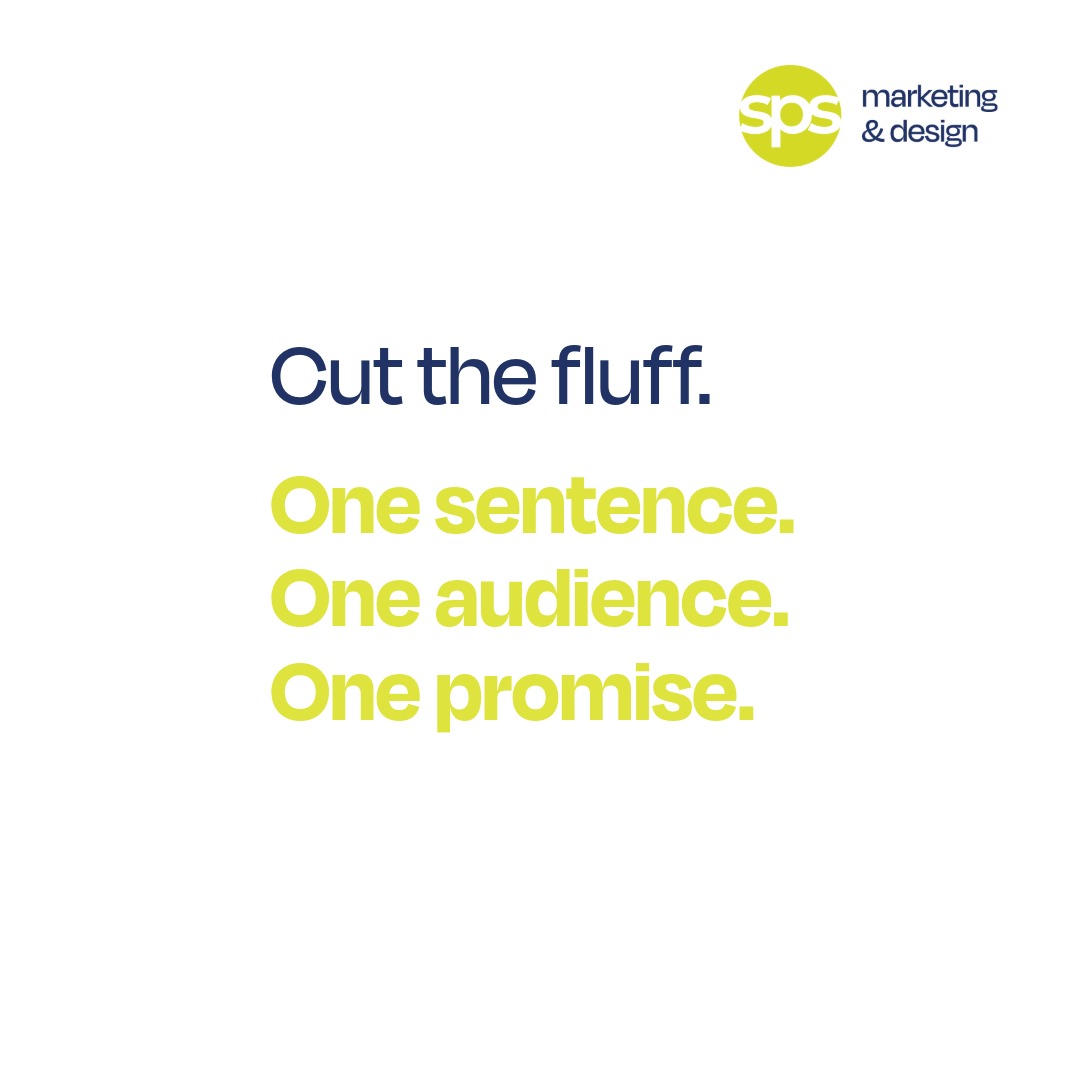
Can you describe what you do in one sentence, to one audience, with one promise? Most businesses can’t. Not because they’re incompetent, but because they’re trying to be too much to too many. They want to appeal to everyone. They want to avoid choosing.
But choosing is the point. Positioning is sacrifice. It’s the courage to say “this is who we are” and “this is who we’re not”. Weak brands avoid that decision. Strong brands embrace it.
Why clarity feels risky (but isn’t)
The biggest resistance to positioning is fear. Fear that narrowing the message will narrow the opportunity. Fear that choosing an audience will exclude others. Fear that specificity will make the brand smaller.
But the opposite is true. Specificity creates strength. Focus creates authority. Clarity creates confidence. When you articulate your position clearly, you don’t shrink your market. You sharpen it. You make it easier for the right people to choose you and easier for your brand to stand for something.
Design becomes powerful when strategy comes first
Positioning doesn’t replace design. It empowers it. When you know exactly who you’re for and what you stand for, design becomes sharper, messaging becomes cleaner, and storytelling becomes stronger. Design stops being decoration and becomes direction.
If your brand is struggling, start here
Before you redesign or rebrand anything, ask:
If you can’t answer these clearly and consistently, that’s the work. Clarity first. Everything else second.
The brands that win are the ones people understand. If your audience gets you, they can trust you. If they trust you, they can choose you. And if they choose you, you win.
If you want sharper positioning and a brand people actually understand, let’s talk.